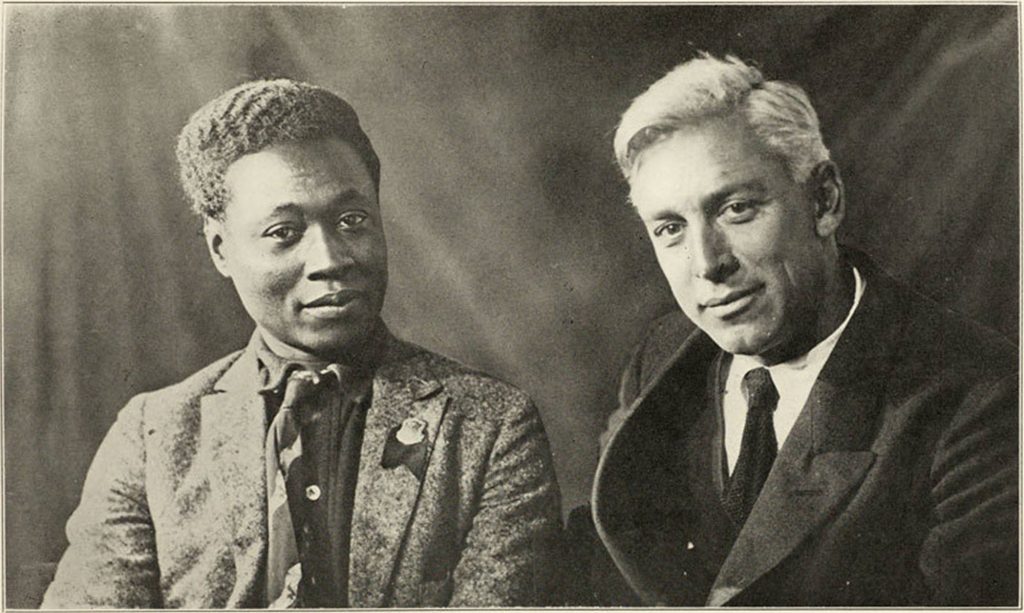
Max Forrester Eastman
(January 4, 1883 – March 25, 1969)
Max Eastman was an American writer, editor, and poet who began as one of the leading socialists of the early twentieth century and ended as one of its most clear-eyed critics.
He edited the radical magazines The Masses and The Liberator, fought for women’s suffrage, and at first welcomed the Bolshevik Revolution as the path to greater freedom. After living in the Soviet Union in the 1920s, watching the struggle between Trotsky and Stalin, and seeing friends silenced or killed, he concluded that Marxism was not a science but a philosophy that treats History as a purposeful being or entity. Central planning, he decided, cannot coexist with human liberty.
Eastman spent the rest of his life explaining that failure. Influenced by the Great Depression and by economists such as Friedrich Hayek and Ludwig von Mises, he became a consistent defender of free-market capitalism as the only system compatible with individual dignity and genuine progress. He wrote for Reader’s Digest and The Freeman and gathered his case in Reflections on the Failure of Socialism (1955), the book that supplies many of the quotations on this site.
This site exists to keep those later writings in circulation. Eastman’s value is not that he changed sides, but that he showed why the change was necessary: socialism’s promises rest on mixing observable facts with animistic presuppositions about History, Society, and inevitable progress. The result is a priesthood that treats dissent as heresy.
Readers who want primary-source arguments against centralized power, ideological capture, and the confusion of science with religion will find them here.
~ Lucio Saverio Eastman
Max Eastman Quotes
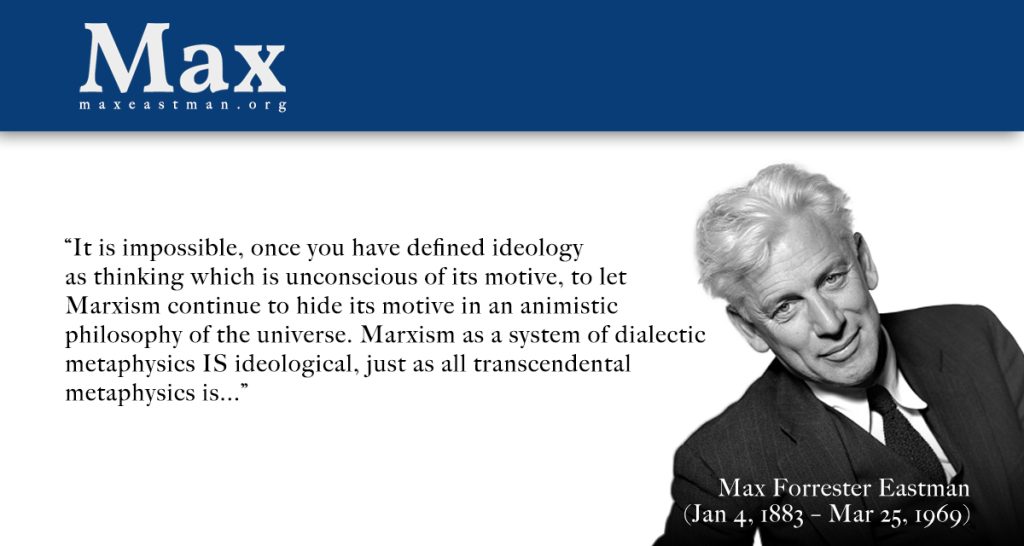
Dialectic Metaphysics IS Ideological
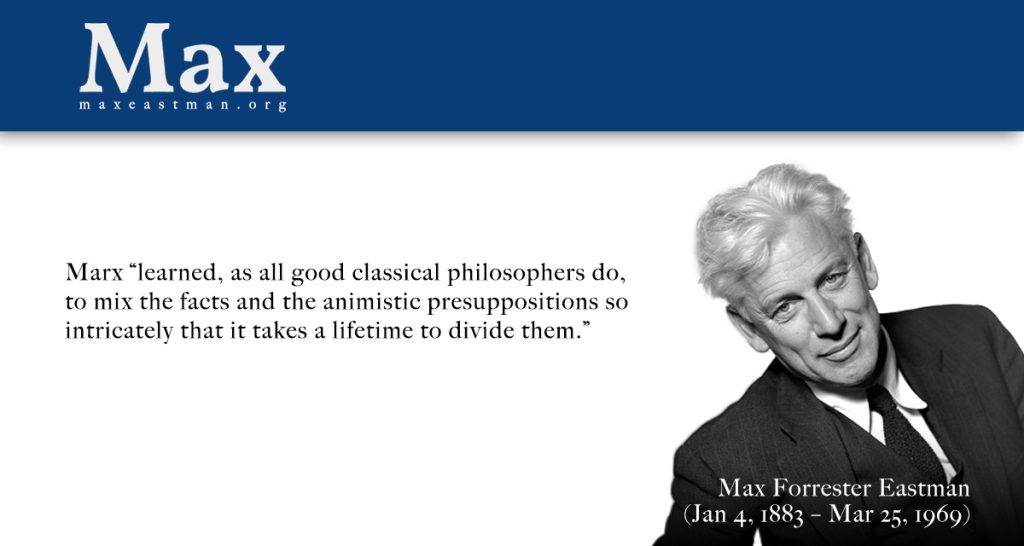
Mix the Facts
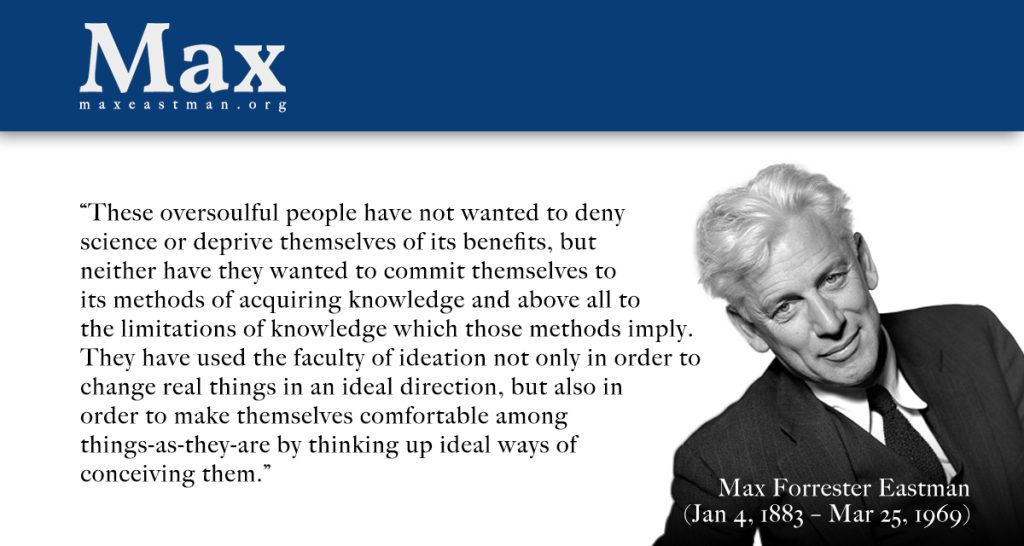
Oversoulful People
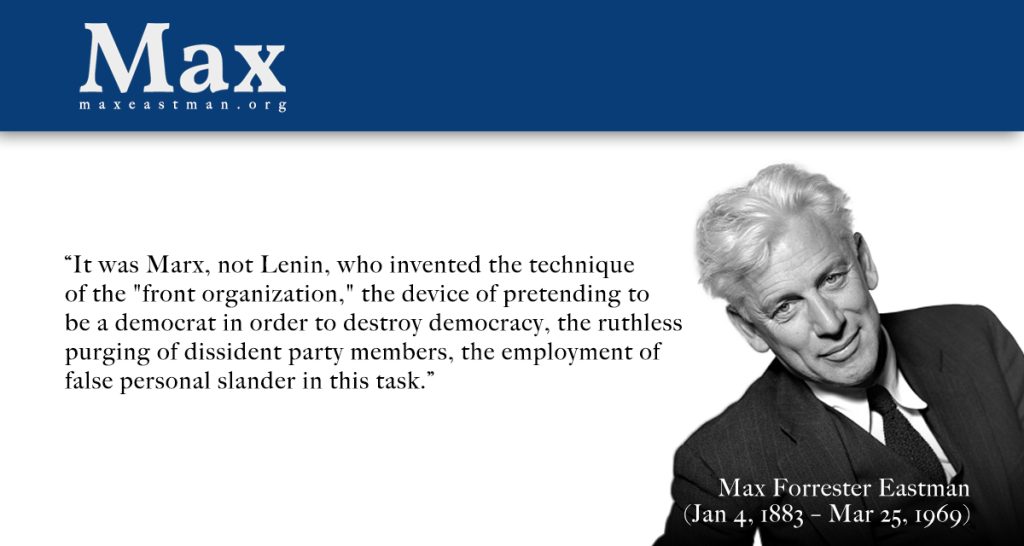
Front Organization
“Max Eastman spent the first half of his life trying to fit himself into larger frameworks: Christianity (provided, somewhat unorthodoxly, by his mother); feminism (promoted even more unconventionally by his sister); and then socialism (advocated by his uncompromising first wife). When each ideology appeared to fit Max into prescribed patterns of institutional behavior— of the church, the party, or any other organization—he balked.
Max spent the second half of his life looking for an ideological home while trying to defend himself against those who seemed to know exactly what he was thinking and where he belonged.”
From Max Eastman: A Life
by Christoph Irmscher